

Ever hit send and then spot a spelling slip? If you typed realy when you meant really, you’re in good company. Almost everyone makes this mistake at some point, from students to busy office workers.
Here’s the short version. The correct spelling is really, with two l’s and a d in the middle. So, when it comes to Realy or Really, the answer is simple. Use really. This guide explains why the wrong spelling sneaks into so much writing, how to say the word, and a few easy tricks to remember it. Think of this as a chat over coffee, not a grammar lecture. You won’t need a degree to follow along.
Realy or Really: Quick Answer
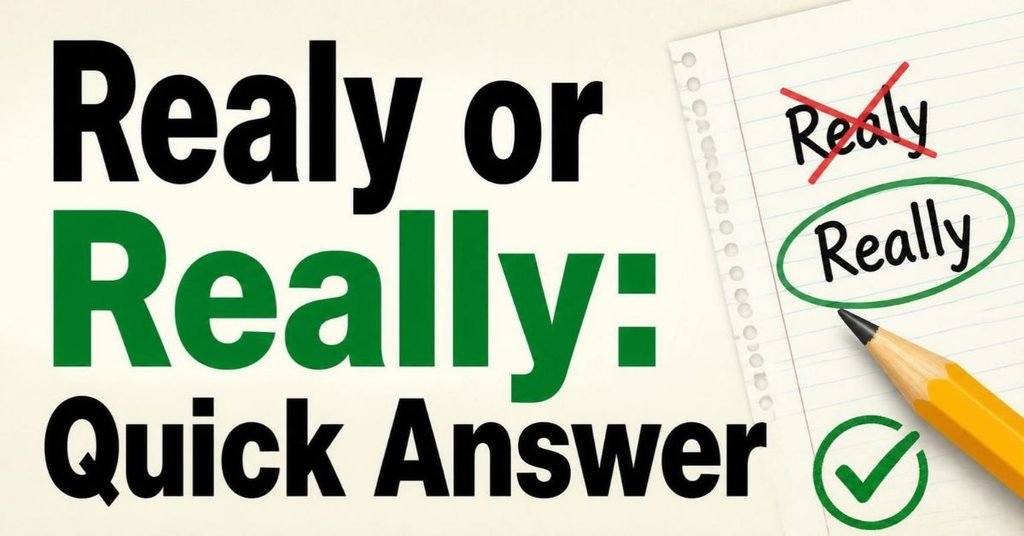
The correct spelling is really. Realy is a misspelling, and no standard dictionary lists it as a word. Most spellcheck tools will underline it in red, and for good reason.
Here’s a quick test you can run in your head. Read the sentence with really in place. If it sounds natural, you’ve got it right. For example, “I really enjoyed the movie” works fine, while “I realy enjoyed the movie” looks like a typo to any careful reader.
What Is Realy?
Realy is a common misspelling. It usually shows up when someone types fast or writes the word the way it sounds in casual speech.
It’s not a real English word on its own. Teachers and editors mark it as an error every time. I once read a job application where the candidate wrote realy twice in one cover letter. The experience was strong, but those mistakes made the whole letter feel rushed.
What Is Really?
Really is an adverb. It changes or strengthens another word, such as an adjective, a verb, or another adverb. You’ll use it to add weight to what you say.
Writers use really for a few main jobs:
- Adding emphasis: The soup is really hot, so wait a minute before eating it.
- Confirming truth: Did he really say that in the meeting?
- Expressing surprise: Really? I had no idea you finished already.
Each of these uses follows the same spelling, so once you learn it, you can use it everywhere.
How to Pronounce Realy vs. How to Pronounce Really
Here’s where the confusion starts. In fast speech, the two spellings sound almost the same. Your ear picks up the sound, and your fingers type what feels natural.
English spelling doesn’t always match sound. The d in really doesn’t make a clear sound when we talk, so the word feels shorter than it looks on the page. That gap between sound and spelling is the main reason people get tripped up.
British English Pronunciation of Really
In British English, most speakers say RIL-ee or RIH-uh-lee. The first vowel sounds like the i in ill. The ending is a soft ee sound.
Try saying it slowly. Say ril, then ee. You’ll notice there’s no d sound, even though the spelling has one.
American English Pronunciation of Really
Many Americans say REE-lee or REE-uh-lee. The first vowel is long, like the ee in green. It’s a smooth, quick word in everyday talk.
Both accents drop the d sound. That’s why the spelling feels tricky. Your ear hears a shorter word than your eyes see.
The Origin of Really
The story starts with the word real. It came into English through Old French and Latin roots that relate to a thing or something actual. Over time, real became the base of many words about truth and substance.
The suffix -ly came from Old English. It turns an adjective into an adverb. When you add it to real, you get really, which means in a real way or to a great degree. This is correct word formation, and it follows the same pattern you see in quickly, bravely, and softly.
British English vs. American English Spelling
Some words change between British and American spelling. Colour becomes color, and centre becomes center. Really is different, because the spelling stays the same in both systems.
That’s good news. You don’t need to pick a regional version. Whether you write for London, Lahore, or Los Angeles, the right form is always really.
Which Spelling Should You Use?
Use really every time. It’s the only spelling accepted in standard English spelling, whether you’re writing a school essay, a blog post, or a text to a friend.
Some people think casual writing gives you a pass on spelling. It doesn’t work that way. Readers notice slips, and a single misspelled word can make your message look careless.
Common Mistakes with Really
Most errors come from a few patterns. Here’s what to watch for:
- Typing realy when you mean really in a fast message.
- Mixing up real and really, like writing “it’s real good” in a work email.
- Using really so often that your writing starts to sound flat.
That last one matters more than most people think. Phrases like “really, really important” lose punch when repeated. Try truly, very, or genuinely for variety.
Really vs Real: Know the Difference
This is one of the most commonly confused words pairs in English. The key is knowing which part of speech you need.
Real is an adjective. It describes a noun, like a real chance or real gold. Really is an adverb. It works with other words, such as verbs, adjectives, or adverbs.
Look at these three examples:
- Modifying verbs: I really like this song.
- Intensifying adjectives: The test was really hard.
- Modifying other adverbs: She ran really quickly.
Once you see the pattern, the choice gets easier. If the word describes a thing, use real. If it strengthens an action or a quality, use really.
Why Do People Misspell Really as Realy?
Spelling and sound don’t always match, and that’s the biggest cause. People write what they hear, and the d gets lost in speech.
Speed plays a role too. Thumbs fly across phone screens, and autocorrect doesn’t always catch the error. Many people also see realy in casual chats and copy it without thinking.
Another reason is double-letter confusion. Some writers feel the word needs a double e, so they guess. The real pattern to learn is real plus ly, and that settles the question fast.
| ALSO READ: |
| Speach or Speech: Correct Spelling, Meaning & Uses 2026 |
| Lieing or Lying? Which One Is Correct (And Why It Matters) |
| Todays or Today’s – Which One Is Correct? (Full Grammar Guide) |
How to Remember the Correct Spelling of Really
Here’s the easiest trick. Think of real plus ly. Real is the base word, and adding ly makes it an adverb. So you get really, not realy.
The double L spelling rule helps here too. When a word ends in l and you add ly, you keep both l’s. Look at these examples:
- Real + ly = really
- Final + ly = finally
- Usual + ly = usually
Keep an eye on exceptions. Full becomes fully, which drops an l. Still, most words with an l ending keep both letters, so the pattern works in most cases.
Quick Checks Before You Hit Send
Spellcheck helps, but it can miss errors. It flags realy most of the time, yet it may let other wrong words slip through. Build a few habits that catch what software misses.
- Search your draft for realy using Ctrl+F or Command+F.
- Read the sentence out loud and listen for the missing d sound.
- Swap in very or truly to see if the meaning still fits.
These checks take less than a minute. They also help you spot other mix-ups, like really and rally.
Realy or Really Synonyms
Really is flexible, but sometimes another word makes your writing sharper. Synonyms add variety and keep readers interested.
Here are a few swaps you can try:
- Truly: I truly appreciate your help on this project.
- Very: The room is very quiet tonight.
- Genuinely: She is genuinely excited about the trip.
- Honestly: Honestly, I thought the plan would fail.
If you want to confirm a point, try in fact. For a contrast, in reality works well. These phrases often sound stronger than really in formal settings.
Really in Everyday Examples
Seeing the word in real sentences makes the rule stick. Here’s how it shows up in daily life.
Emails
In email, a small typo can change how people read your tone. Try a line like “Thanks, I really appreciate your quick reply.” Clean spelling makes you sound polished and kind, which helps people say yes to your next request.
News
News writers use really to add punch or to quote someone. A sentence like “Officials say the outage was really serious” reads clearly. Editors check spelling, so the correct form appears in print every time.
Social Media
Posts move fast, so typos slip out. A comment like “This song is really good” shows warmth and confidence. Realy stands out and makes the post feel rushed.
Formal Writing
Formal writing calls for clear, exact language. Really still works here, but use it with care. A sentence like “The results really support the hypothesis” sounds fine, as long as you don’t pile on intensifiers.
Realy or Really Google Trends and Usage Data
People search for this spelling because they want a quick answer. If you check Google Trends, you’ll see readers comparing realy and really. That tells you they want clarity, not a long lecture.
Language corpora, which collect millions of sentences from books, news, and conversations, show really appearing constantly. Realy shows up almost only as a typo. That’s a strong sign which form is standard.
You can run your own check in Google Trends by typing both words. It takes less than a minute, and it shows you what readers care about right now.
Comparison Table: Realy vs. Really
The table below sums up the key differences. Use it as a quick cheat sheet when you’re unsure.
| Feature | Realy | Really |
| Status | Common misspelling | Correct standard spelling |
| Part of speech | None, not a valid word | Adverb |
| Meaning | None | Truly, very, or in fact |
| Example | Not accepted | I really like this plan. |
| Spellcheck | Usually flagged | Accepted |
The table makes one thing clear. Really is the only choice you’ll ever need.
Texting and Chat Habits
Texts are a different story. People shorten words all the time, so realy and really both appear in casual chats. Nobody will question a quick text.
Still, keep the right spelling for work, school, and anything public. Good habits in chat carry over into the writing that really matters.
Frequently Asked Questions
Is realy ever correct in any form of English?
No. For Realy or Really, only really is correct. Realy never counts as a valid spelling.
Why does realy look almost right?
Realy or Really look close because the d sound fades in speech. People often spell the word based on sound alone.
Can I use really in formal writing?
Yes, really works in formal writing. Use it sparingly, and remember that Realy or Really has only one correct spelling.
Will spellcheck always catch realy?
Not always. Spellcheck usually flags Realy or Really errors, but it can miss a wrong word. Read your text aloud before sending.
What is the easiest way to remember the spelling of really?
Add ly to real and you get really. That simple rule settles Realy or Really, because the word keeps both l’s.
How is really pronounced in British English?
In British English, really sounds like RIL-ee or RIH-uh-lee. The word has no d sound, so Realy or Really can sound the same.
How is really pronounced in American English?
In American English, really usually sounds like REE-lee. Realy or Really both sound alike in speech, which explains the common confusion.
What are some synonyms for really?
Good options include truly, very, and genuinely. Swap them in when Realy or Really feels repetitive in your writing.
Conclusion
So, Realy or Really? The answer is always really. Keep that in mind, and the mistake gets much easier to avoid. Realy or Really only looks tricky because the sound hides the d, but the spelling rule is simple. Real plus ly equals really, every single time.
Next time you type a sentence, pause for a second. Ask yourself whether the word is Realy or Really, then check before you send. Small habits like reading aloud and searching your draft catch it fast. Share this guide on Realy or Really with a friend who struggles with it, or leave a comment with your own tricks.

Jack Thompson is the admin of ModernHexa.com, a platform focused on grammar, language, and effective communication. With a strong interest in English grammar and writing, Jack works to provide clear, practical, and easy-to-understand content that helps readers improve their language skills and communicate with greater confidence.

4 thoughts on “Realy or Really: Common Spelling Mistake Explained With Examples (2026)”